Disclaimer: this post is in no way about a teacher abroad. It is a complete one-off….
Confidence. NOUN. The feeling or belief that one can have faith in or rely on something.
People love stories. Not only other people’s. We tell ourselves stories. We make them up based on what we hear. We elaborate on rumours, let our imaginations get carried away, put two and two together to make five, and we do it every day.
The stories I will tell here are not made up.
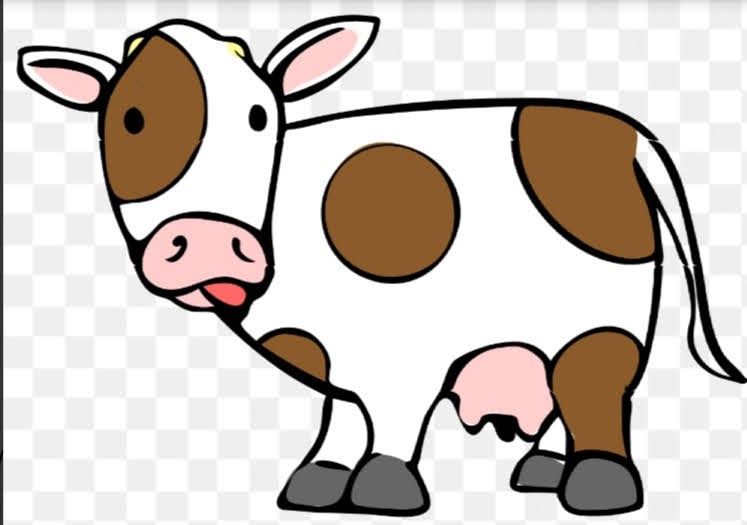
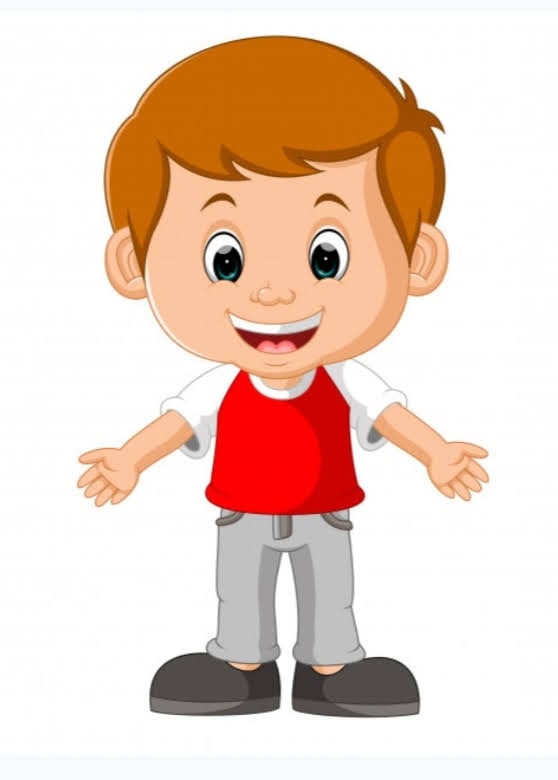
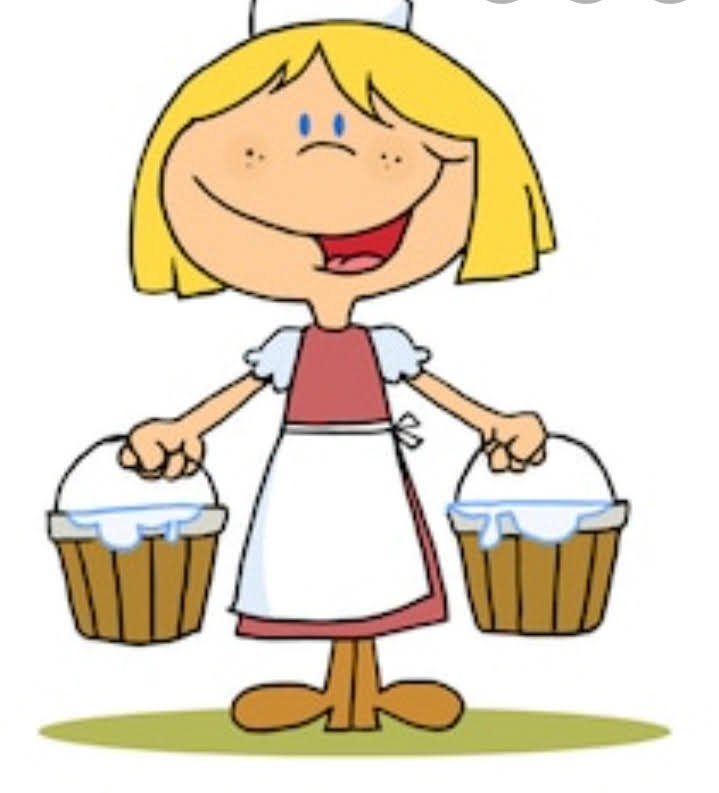
Above is a picture of a cow. Also there is a boy, and a milkmaid. This is their story….
Smallpox was a very bad disease. Please note: was. 10,000 years ago it appeared in northern Africa. It caused fever, vomiting and rashes. It killed 30% of its victims within 2 weeks of infection. Slowly, it spread around the world, first through the Egyptians, then the Arab world during the crusades, then the Americas through the Spanish and Portuguese conquests. It has killed billions of people throughout history and it is estimated that it killed 300-500 million people in the 20th century alone.
Efforts were made to combat this awful disease from very early on. In 1022 a Buddhist nun worked out that putting a small amount of the disease into people caused them to fight it and become immune. This process, called variolation, was effective some of the time, but a small percentage would still die after exposure and the process was not completely safe.
Let’s fast-forward to 1762, to Sodbury, near Bristol, and the first of our dairy maids. A country doctor on a routine visit to a farm overheard the young girl declare that she will never catch smallpox, as she has already had cowpox. This historic statement was also witnessed by the doctor’s young apprentice: a 13 year old boy by the name of Edward Jenner. Having heard this statement, Jenner decided to devote his life to finding out if it was true.
Fast-forward again to 1796, and our second dairy maid. This one went by the name of Sarah Nells. She had fresh cowpox lesions caught from a cow, named Blossom. Jenner wondered whether he could use matter from these lesions to inoculate another person against smallpox. He decided that the only way to find out was to try. His guinea pig for this astonishingly risky experiment? An 8 year old boy called James Phipps, the son of his gardener. The lad was given the fresh cowpox matter, suffered a few days of fever, and then rerecovered. This was not the end of the process: the boy was then infected with smallpox, to determine whether or not the experiment had worked. Had it failed, the he could have died.
Nothing happened.
Jenner was triumphant. Lengthy vaccination campaigns followed throughout the 18th, 19th and 20th centuries and eventually, in 1979, the World Health Organisation certified the world-wide eradication of smallpox.
It was one of the greatest achievements of medical history and would never have happened had it not have been for Sarah Nells the milkmaid, James Phipps and, of course, Blossom. The Latin for cow is vacca, and so the story of vaccination comes to an end.
I retell this here, in my humble blog, because I think it to be one of the most miraculous discoveries of all time, and also because the human race is very, very quick to forget. This is their story…..
In the year 2000, 21 years after they declared the eradication of smallpox, the World Health Organisation declared measles to be eliminated from the United States. This amazing breakthrough in medical history was due to a successful vaccination campaign.
Not two years earlier, however, a little known UK doctor by the name of Andrew Wakefield published a study claiming a link between autism and the MMR vaccine. A Sunday Times investigation, led by the journalist Brian Deer, exposed the study to be completely false. Eventually, in 2010, the General Medical Council struck Wakefield off the UK medical register.
But it was too late. The story had already been told.
The seed was sown. A tiny seed of doubt that, no matter how unsubstantiated, could not be unplanted. The rumours spread, people belived them. Slowly but surely, measles returned. In 2016 the director of the National Institutes of Health wrote that parents refusing to vaccinate their children were leading to outbreaks of preventable diseases, including measles. The World Health Organisation reported that the rise in measles is directly caused by anti-vaccination movements. At first it was gradual but it gained momentum until, from January to August 2019, over two thousand cases of measles were reported in the US across 30 states. An official state of emergency was declared in the States of New York City and Washington.
The vast majority of reported cases had not received vaccination.
On its list of Ten Threats to Global Health in 2019, the World Health Organisation has listed ‘vaccine hesitancy’ as one of them.
Why am I writing this? Why am I not posting whimsical anecdotes about the slightly eccentric adventures of A Teacher Abroad? Have I become drunk on blogging power? That, dear reader, is for you to decide. Before you do, however, here is the final story….
As of December 8th, I am fully vaccinated against Covid-19. The Abu Dhabi authorities offered us teachers access to a vaccine as priority. I bit their hands off, perhaps slightly controversially as the vaccine was, at the time, still under phase 3 trial. However, they had been granted permission to release it for emergency use prior to the end of the trial. I had to sign paperwork declaring I understood this was the case.
I can report that I am still alive. Side effects? None. Only a tiny amount of the people I know took up the offer of the emergency release vaccine. I can understand this as the phase 3 trial had not officially ended. But I went for it straight away. Those who know me know that I am not shy when it comes to opinions. I do, however, try my best (and am still working on it) to refrain from forcing these on people or bandying them about in a public forum. On this occasion I am making an exception. I feel the need to air my laundry in public, to come out, to let the world know….
I am pro-vaccine.
I feel strongly enough about the topic as to have undertaken some research. I happened upon the excellent website http://vaccineconfidence.org which is home to The Vaccination Confidence Project. The director of the project, Professor Heidi Larson, has raised awareness through an excellent Ted Talk entitled Rumours, Trust and Vaccines. In it she argues that people’s lack of trust in the authorities has led to where we are now. She goes on to suggest that misinformation such as that of Dr Wakefield is only the symptom; the cause is a breakdown in relationships. People trust people. She concludes by saying “If people trust, they’ll put up with a little risk to avert a much bigger one.” Somewhere, along the way, this trust has been lost.
So confidence is the salient word, and the reason you can find the dictionary definition at the beginning of this post. The belief that one can have faith in or rely on something requires the individual to trust. To trust in the science. Science that has been proven (I’m not a scientist but I’m pretty sure that is the point of science).
Further proof of this loss of trust can be found in conversations I have had with peers over the last month. Suspicion has been prevalent. “Have you had any side effects?” Is the most frequent question. I didn’t have any, but even if I had they would have gone away. I would still be immune.
(At this point it is very important to point out that there are those with health issues that hugely increase the risk of taking the vaccine. For these people it is a completely different story.)
I know that there is still risk involved even if you have a clean bill of health. But it is small risk. Small risk to avert the big risk, namely that we don’t defeat Covid. A very wise man once said to me “you have to slightly think bigger picture” and the big picture for the eradication of Covid is vaccination.
There is no other option.
The other theme that comes up in conversations is that of hesitancy. This is where I become a bit less tolerant and the full set of opinionated teeth are bore. “I think I’ll wait and see.” Wait and see what, exactly? During the phase 3 trial this was understandable, but that came to an end in mid-Dedember. So what, then? See how it goes for other people? Who are these other people who should take the risk first? Are these people perhaps inferior and thus should serve as the Corona Crash Test Dummies? As we move swifly into 2021 and deeper into this age of flakey complacency we seem to find ourselves in, we would perhaps do well to remember that our grandparents did not have the option of saying “I think I’ll wait before I go to war, see what happens to other people first.”
But war is what we are faced with; war against a virus. And whilst you are twiddling your thumbs, the virus grows. Mutates. Spreads further. More restrictions will be implemented, more lockdowns announced and, of course, the authorities will get the blame. The mistrust will deepen, and the spiral will continue downwards.
So here is a novel suggestion for those of us for whom this is our first global crisis, a battle cry for the Millennials, the Snowflakes, the Age of Entitlement. Break the spiral. Stand on your own two feet. Ask not what your country can do for you, but what you can do for your country. Basically, grow a pair (who knows, if you’re lucky that might even be a side-effect).
Let us, before I fall off my soap box, return to our mantra: people believe stories. People are suspicious and hesitant because they hear rumours which grow in their imaginations. But the good news is there is a flip side to the coin: people, are also inspired by stories. You can plant a seed of hope just as easily as a seed of doubt, through the power of a story. They seem to have a hold over people that is equally strong whether the message is positive or negative. As the greatest of all men said, “Careful the tale you tell, that is the spell.”
So…..
In 1796, an 8 year old boy was deliberately infected with a disease. There was no proven science to believe in. No phase 3 trial. No phase 1 or 2, for that matter. In fact, he could have died. He suffered side effects. He got better. His sacrifice changed history.
We are in a global disaster. There are vaccines which have now been proven to work using good, robust science. You are asked to make a small sacrifice with very little risk attached for a cause far greater than your own. Tell yourself the story about what an 8 year old boy was able to give to the world.
Now what do you do?
https://www.vaccineconfidence.org
 A Teacher Abroad